Transforming Educational Materials with the HandDrawn School Education Icon Set
In the digital age, educational content often suffers from a paradox: it is packed with information but lacks visual warmth. Text-heavy slides, rigid corporate templates, and sterile vector graphics can create a barrier between the educator and the student. For teachers, instructional designers, and e-learning developers, the challenge is not just conveying facts but creating an environment that feels inviting, approachable, and human. This is where the HandDrawn School Education Icon Set becomes an essential tool. By introducing organic lines and a sense of imperfection, this resource bridges the gap between cold data and human connection, transforming standard educational materials into engaging learning experiences.
The Visual Disconnect in Modern Education
Many adults tasked with creating educational resources face a specific set of challenges. Whether you are a teacher preparing a presentation for a classroom, a curriculum developer designing an online course, or a parent creating study aids at home, the pressure to be visually appealing is high. However, most stock icon libraries offer sleek, geometric, and highly polished designs. While these look professional, they can feel impersonal. In an educational context, especially when dealing with younger audiences or complex abstract concepts, overly perfect graphics can increase cognitive load rather than reduce it.
The goal for most educators is clarity and engagement. Students need to focus on the lesson, not struggle through dense walls of text. Yet, finding visuals that match the tone of a friendly, supportive classroom is difficult. The standard "corporate Memphis" style or flat design often fails to convey the creativity and curiosity that education should inspire. When visuals feel too manufactured, they can inadvertently signal that the content is rigid and unapproachable. This disconnect is what the HandDrawn School Education Icon Set aims to resolve by bringing back the texture of chalk on a blackboard or ink on paper.
Why Hand-Drawn Aesthetics Matter
The HandDrawn School Education Icon Set leverages the psychological power of hand-drawn imagery. Research in visual communication suggests that imperfect, sketched elements are perceived as more authentic and trustworthy. They mimic the natural way humans learn—through doodling, sketching, and annotating. When a student sees an icon that looks like it was drawn by a person, it lowers their defenses and makes the material feel less like a test and more like a conversation.
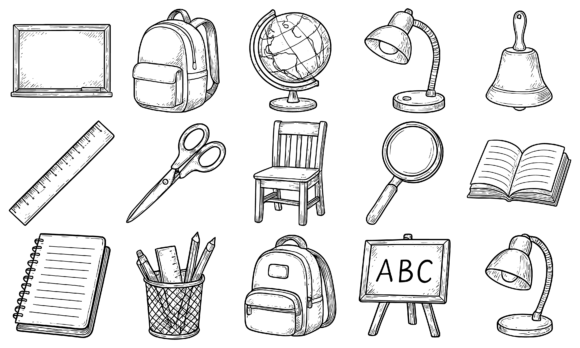
This set addresses the need for flexibility and warmth. Unlike rigid clip art, hand-drawn icons have a dynamic quality. The slight variations in line weight and the organic curves suggest movement and thought. For educators, this means the visuals do not just sit on the page; they interact with the content. The HandDrawn School Education Icon Set provides a cohesive library of symbols that range from basic stationery like pencils and books to more complex representations of subjects like science, mathematics, and history, all unified by a consistent artistic style.
Key Benefits for Educators and Designers
- Reduced Cognitive Load: Simple, sketched icons are easier for the brain to process than detailed photographs or complex 3D renders, allowing students to focus on the core message.
- Emotional Connection: The human touch inherent in the drawings fosters a sense of empathy and approachability, which is crucial for motivating learners.
- Versatility: These icons adapt well to various backgrounds, including textured papers, whiteboards, and digital screens, without looking out of place.
- Consistency: Using a dedicated set ensures that all visual elements in a lesson plan share the same aesthetic language, creating a polished and professional final product.
Practical Applications in the Classroom and Beyond
The utility of the HandDrawn School Education Icon Set extends far beyond simple decoration. It serves as a functional component of instructional design. Consider the creation of a slide deck for a lecture on environmental science. Instead of using a generic globe icon, a hand-drawn version from the set can serve as a focal point that encourages note-taking around it. Teachers can use these icons to create visual anchors for key concepts, helping students recall information more effectively during assessments.
For online learning platforms, where screen fatigue is a common issue, these icons provide a necessary break from the monotony of standard web design. An e-learning module about history can use hand-drawn maps, quills, and ancient artifacts to transport the learner into the narrative. The HandDrawn School Education Icon Set allows designers to build a distinct brand identity for their courses, making them memorable and distinct from the thousands of other generic courses available online.
Furthermore, these icons are invaluable for assessment tools. Creating worksheets or quizzes with hand-drawn elements can make the testing experience feel less intimidating. A math worksheet featuring sketched numbers and shapes feels more like a game or a creative exercise than a formal examination. This subtle shift in perception can significantly improve student performance by reducing anxiety.
Tailoring the Approach for Different Users
While the core value of the HandDrawn School Education Icon Set remains constant, different users will approach its implementation based on their specific needs and technical skills.
For K-12 Teachers
Teachers often work under tight deadlines and may not have advanced graphic design skills. For them, the primary need is speed and ease of integration. The icons in this set are typically designed to be drag-and-drop ready. A teacher can quickly insert a sketched apple to represent a lunch break or a magnifying glass for a science experiment. The recommendation here is to use the icons sparingly as signposts. Do not clutter the slide; instead, let one strong icon per concept guide the student's eye.
For Instructional Designers
Instructional designers working on large-scale e-learning projects require consistency and scalability. They might use the HandDrawn School Education Icon Set to establish a style guide for an entire curriculum. Their approach involves mapping out the user journey and selecting specific icons to represent navigation points, feedback loops, and achievements. They may also customize the color palette of the icons to match their institution's branding while retaining the hand-drawn stroke quality. The goal is to create a seamless visual narrative that supports the pedagogical strategy.
For Parents and Homeschoolers
Parents creating educational materials at home often seek personalization. The hand-drawn aesthetic aligns perfectly with the DIY nature of homeschooling. These users can print the icons on cardstock to create flashcards, cut them out for physical manipulatives, or use them in digital planners. The organic feel of the HandDrawn School Education Icon Set complements the intimate, personalized learning environment of a home school, making the materials feel crafted specifically for the child.
Implementation Best Practices
To get the most out of the HandDrawn School Education Icon Set, it is important to follow a few best practices regarding layout and usage. First, maintain whitespace. Hand-drawn icons breathe better when they are not crowded. Allow them space to stand out against the background. Second, consider the background texture. Pairing these icons with a plain white background works, but they often shine when placed on textures that mimic paper, cardboard, or even a chalkboard surface. This enhances the illusion that the content has been physically created.
Additionally, think about color coding. While the icons come in a base style, applying a limited color palette can help categorize information. For example, use blue for water-related topics and green for biology. Consistency in color application across the HandDrawn School Education Icon Set will reinforce learning patterns for the audience.
Finally, remember that these icons are meant to support the content, not replace it. They are visual cues that enhance understanding. Overusing them can lead to distraction. Select the icons that directly correlate with the learning objectives. If a concept is abstract, choose an icon that metaphorically represents it, leveraging the creative freedom that the hand-drawn style affords.
Conclusion
Educational success relies heavily on how well information is presented. In a world saturated with digital perfection, the HandDrawn School Education Icon Set offers a refreshing alternative that prioritizes human connection and clarity. By addressing the challenges of engagement, cognitive load, and emotional resonance, this resource empowers educators, designers, and parents to create materials that truly inspire learning. Whether you are building a complex online course or a simple classroom poster, integrating these hand-drawn elements can transform your project from a standard delivery of facts into a memorable and effective educational journey. Embrace the imperfection, and watch your audience engage more deeply with the content you provide.